‘Scream VI’ Review – Ghostface Takes Manhattan in a Relentless Sequel
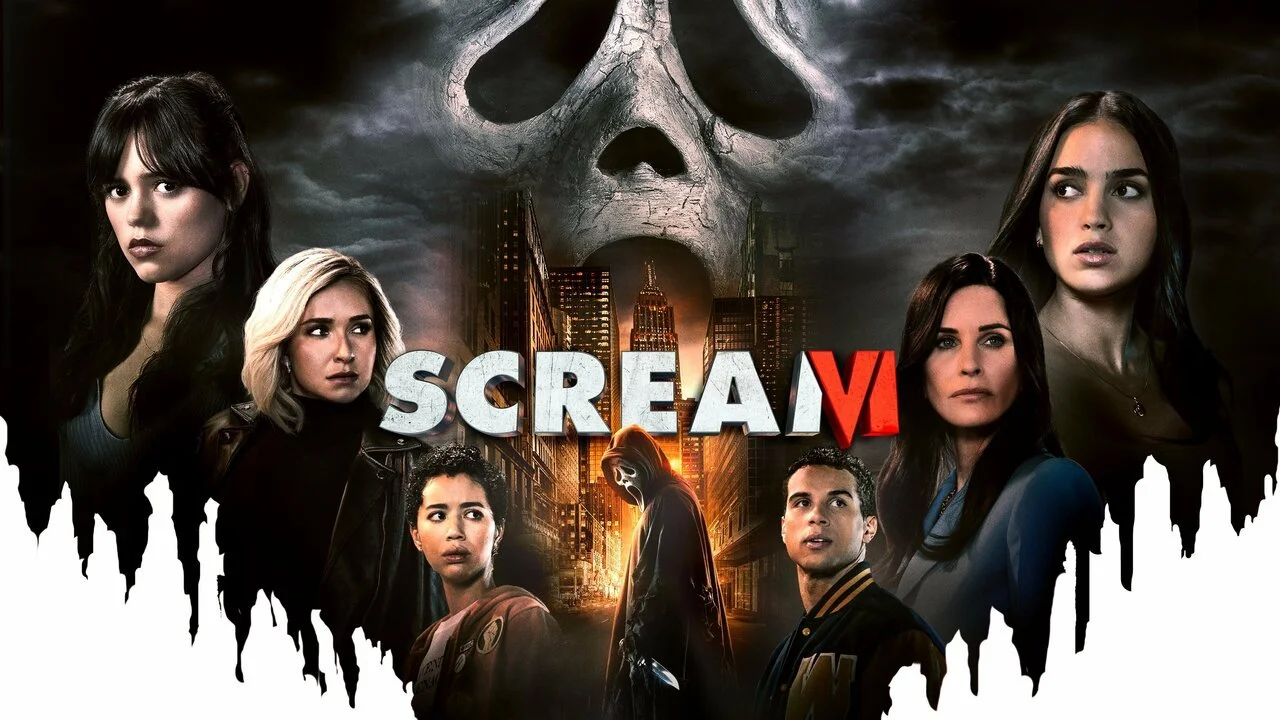
Scream VI (2023)
There’s something bold about taking a franchise rooted in suburban paranoia and dropping it into the middle of New York City. Scream VI doesn’t just change location, it changes scale, intensity, and attitude. The result is one of the most aggressive and suspense-driven entries in the entire franchise.
Following the events of the previous installment, Scream VI wastes no time reminding audiences that Ghostface isn’t done evolving. From the opening moments, the film signals that this entry is going to play differently. Samara Weaving’s Laura Crane becomes the first victim, only for the film to then reveal the initial Ghostface, film student Jason Carvey (played by Tony Revolori) in a twist that genuinely shocks. The decision to unmask a killer so early flips the traditional formula on its head. I remember seeing it for the first time and thinking, “Woah — that’s new,” and meaning it in the best possible way.
But the film doesn’t stop there. It’s soon revealed that Jason and his roommate, Greg, had planned to become the two new Ghostfaces stalking Samantha and Tara. Just as the audience begins adjusting to this bold structural change, the teaser delivers another brutal reversal. Jason discovers Greg gutted in their refrigerator shortly after talking to the real killer on the phone — and before he can fully process what’s happening, he’s murdered by one of the film’s true Ghostfaces. In a matter of minutes, Scream VI establishes a new rule: even the killers aren’t safe. It’s a ruthless reset that immediately raises the stakes and signals that this installment is playing a much more dangerous game.
What truly elevates this installment is its commitment to suspense. The set pieces are some of the strongest the franchise has delivered. There’s a ladder sequence that stands as one of the most nerve-wracking moments in modern slasher filmmaking, not because of excessive gore, but because of spatial tension and timing. The subway sequence is equally effective, playing with visibility, sound, and crowd anonymity in a way that feels uniquely suited to the New York setting. These moments prove that Scream can still innovate within its formula and do so with a bang.
Melissa Barrera’s Sam Carpenter continues to evolve into a compelling lead. Her internal conflict, grappling with her lineage while trying to forge her own identity gives the film emotional weight. Jenna Ortega’s Tara brings grounded vulnerability and defiance, and the returning “Core Four” dynamic strengthens the film’s sense of continuity. I will say the only reason I say that about Jenna is because she grows more throughout the movie, but at the film’s opening, she makes a lot of stupid decisions such as wanting to sleep with a frat boy at a college party when she should know not to trust anyone from what she went through in the previous film. However, there’s an energy to this ensemble that feels lived-in, and that chemistry helps the film move confidently through its more chaotic stretches.
Importantly, Scream VI also understands its place in horror history. It plays with the concept of “franchise fatigue” and audience expectation while still delivering on what fans want: clever dialogue, sharp self-awareness, and a Ghostface who feels genuinely dangerous. This version of the killer is less theatrical and more vicious - less interested in games, more interested in domination. That shift in tone works.
If there’s one area where the film slightly stumbles, it’s in its third-act reveal. While the motive aligns thematically with the franchise’s ongoing obsession with legacy and revenge, the execution doesn’t quite reach the shocking heights of the original. Detective Bailey as Ghostface is a reveal I can get behind. As one of the officers leading the investigation, his position of authority adds a layer of calculated manipulation that works. It even echoes fan speculation from Scream 3, when many believed Detective Kincaid would be the killer, only for the film to reveal Roman Bridger instead.
Ethan being unmasked as a second killer feels less surprising. Mindy calls him out earlier in the film — and she’s right again — which slightly undercuts the impact. The more frustrating reveal, however, is Quinn. After seemingly dying earlier in the film, complete with a body being removed from the apartment, her return as Ghostface stretches plausibility. The fake-out feels engineered more for shock value than narrative cohesion, and in the long run, it doesn’t fully land. The structure also mirrors Scream 2 in a noticeable way, with the killers revealed to be family members seeking revenge, this time as the relatives of Richie Kirsch, one of the Ghostfaces from Scream (2022). The familial revenge angle fits within the franchise’s established pattern, but it does make the twist feel somewhat familiar rather than groundbreaking.
That said, the reveal still supports the film’s larger thematic commentary on obsession, legacy, and the toxic need to “correct” a narrative. The emotional stakes, particularly for Sam, carry enough weight to prevent the finale from feeling hollow. Even if the mechanics of the twist don’t fully shock, the motivations keep it grounded within the franchise’s evolving identity.
What ultimately makes Scream VI land at four and a half stars is its confidence. It doesn’t feel like a franchise going through the motions. It feels hungry. It feels aware. And most importantly, it feels alive. By embracing bigger risks while respecting what made the series iconic in the first place, Scream VI proves that nearly three decades in, this horror franchise still has something to say, and still knows how to make audiences hold their breath.
Verdict:
⭐️⭐️⭐️⭐️½